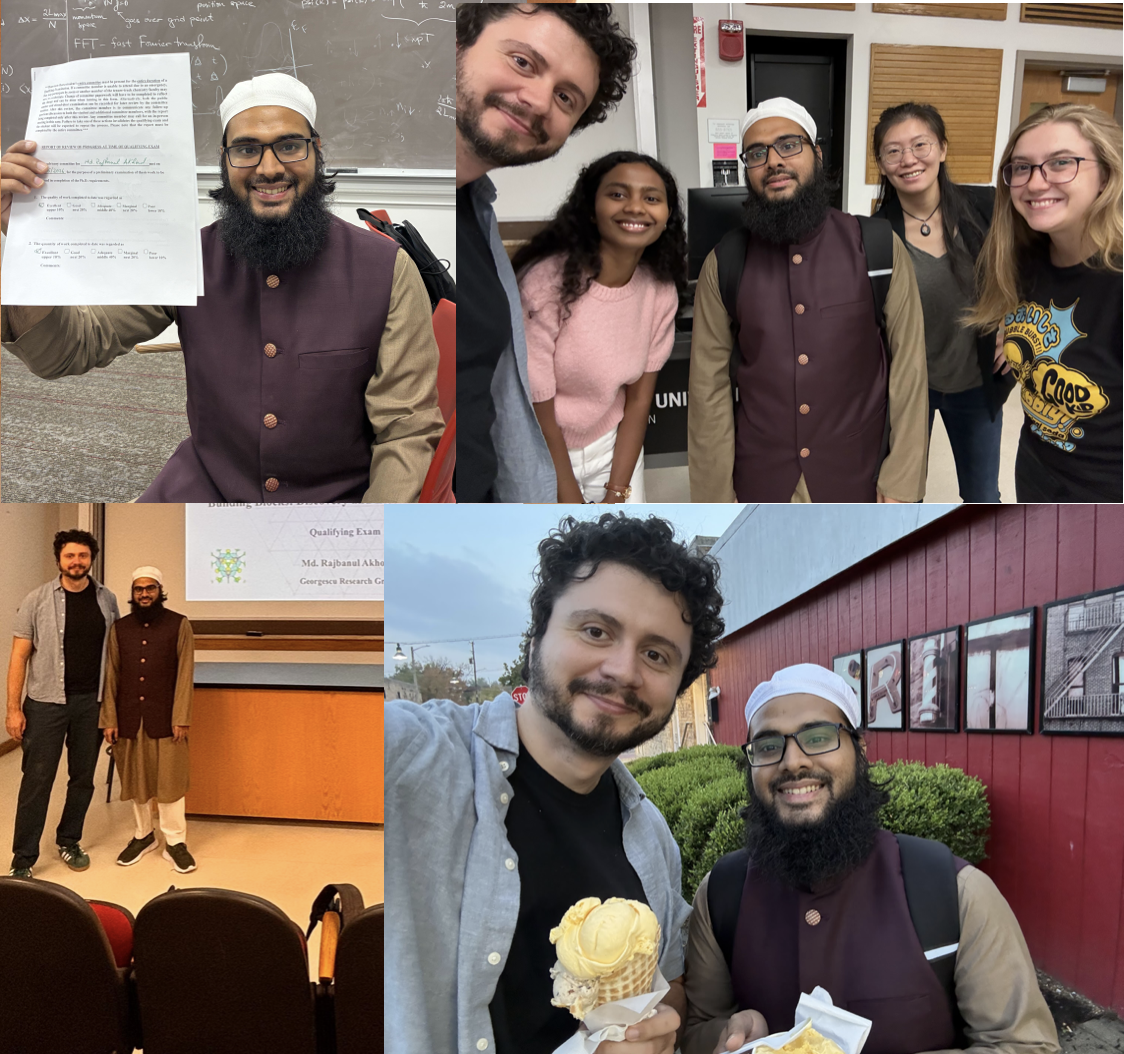
Congratulations 🎉 to Md. Rajbanul Akhond 🎉 for an excellent qualifying exam! Third year Ph.D students at IU Chemistry go through a qualifying exam which IMO is harder than the Ph.D Defense: they give a one hour seminar, followed by 1.5-2hrs of closed door questions from their advisor and 3 other professors. Though I was probably as nervous as he was, I had no doubt he'd do an amazing job and couldn't be prouder.
His presentation was on multiple topics, including correlated electron materials with spins on molecular orbitals in a solid ( https://arxiv.org/abs/2601.04460 )
with his interactive database: https://cluster-explorer.me/ and materials database on materials project: https://next-gen.materialsproject.org/contribs/projects/cluster_materials
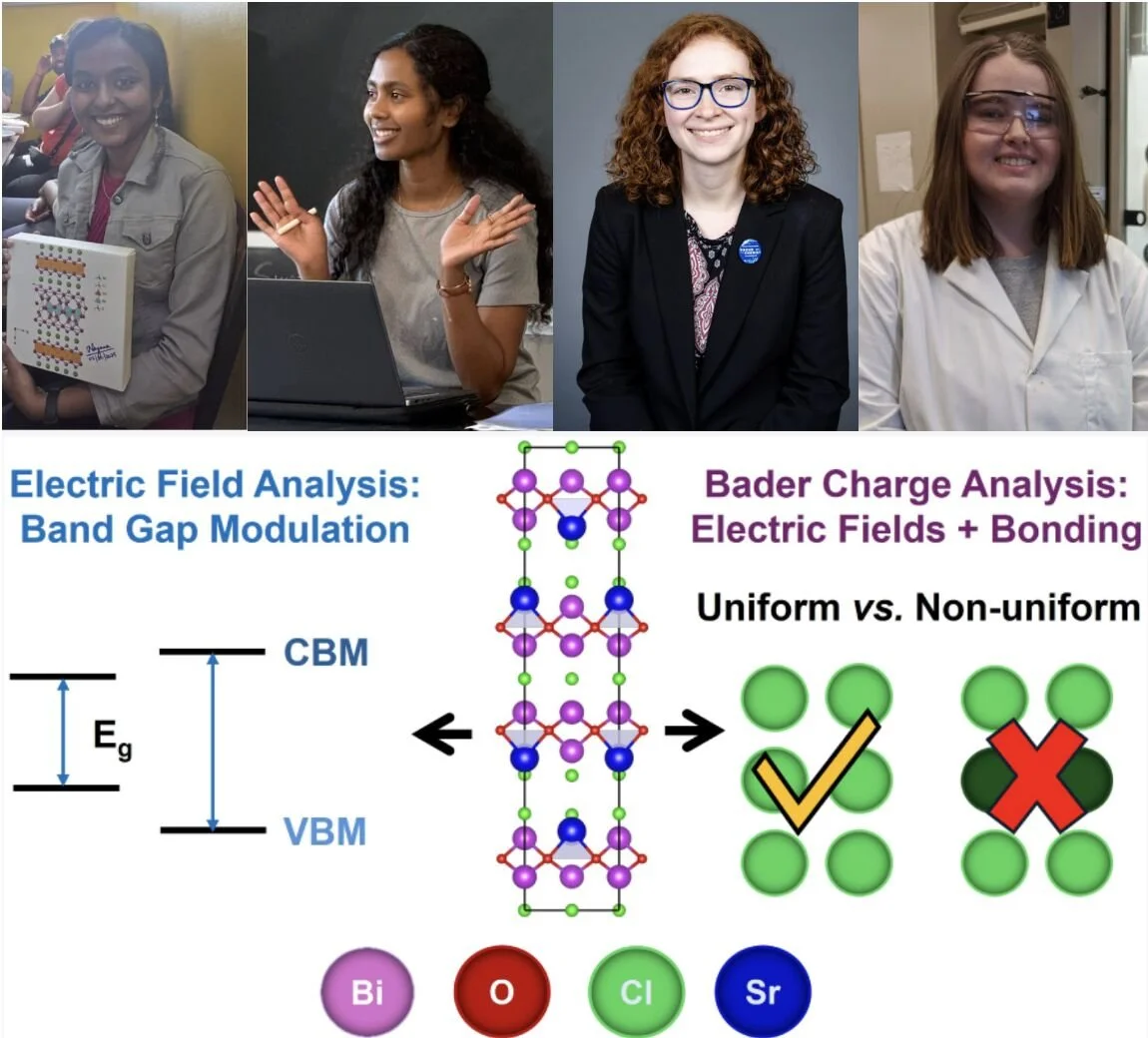
Rules Governing Layered Materials' Stability - published in JACS.
🎉 Congratulations 🎉 to Nayana Christudas Beena, Varsha Kumari (equal-contribution first authors), Emily Ward, and Megan Knobeloch for their wonderful work, now published in the Journal of the American Chemical Society (JACS) ( https://pubs.acs.org/jacsat/article/doi/10.1021/jacs.6c15661/5451203/Chemical-Bonding-Rules-for-Stacking-Sequence )! 🎉.
The question Nayana (who synthesized the materials) and Megan (who performed electron microscopy) brought to Varsha and Emily was: Why are some stacking sequences of charged layers stable in solids and superlattices, but not others?
This is an old question, with surprising consequences, including the superconducting SrTiO3/LaAlO3 interface [2]. Traditionally, much of the explanation has focused on minimizing the electric fields produced by charged layers.
But our materials can even contain two neighboring, negatively charged Cl layers; how can they be stable?
Our answer, inspired by Pauling's Fifth Rule, is to consider chemical bonding and minimize the variation in effective charges between atoms in the same species (quantified using Bader charge). Varsha found that Cl in a bilayer tends to become less negatively charged than those in a monolayer due to covalent bonding (think Cl2 molecules in which ions are neutral while in NaCl, the Cl is 1-). Electric fields, instead of being minimized, may be *needed* to make the Cl ions equivalent. Bi 3+ for example, may lead to more covalent bonding than Sr 2+, further complicating the simple electric fields picture.
Electric fields of course still determine the electronic structure: smaller internal fields generally favor larger band gaps, while stronger fields reduce them, as also explored by Ogawa and Walsh [3]. But the most stable structure need not have the smallest field or largest band gap! In our materials, the preferred structure has an intermediate gap.
The electronic structure is also influenced by Bi lone-pair bonding, building on Emily's earlier work on visualizing lone pairs in solids [4].
This is our first joint publication from the NSF-funded collaboration between Sara Skrabalak's group and ours.
Wonderful to see synthesis, electron microscopy, and theory come together to answer a fundamental question about chemical bonding!
References:
[1] Our JACS paper: https://pubs.acs.org/jacsat/article/doi/10.1021/jacs.6c15661/5451203/Chemical-Bonding-Rules-for-Stacking-Sequence
[2] Nakagawa, Hwang & Muller, Nature Materials: https://www.nature.com/articles/nmat1569
[3] Ogawa & Walsh, JACS: https://pubs.acs.org/jacsat/article/147/1/821/3735625/Electrostatic-Control-of-Electronic-Structure-in
[4] Emily's work on lone pairs in solids: https://iopscience.iop.org/article/10.1088/2515-7639/adc33e
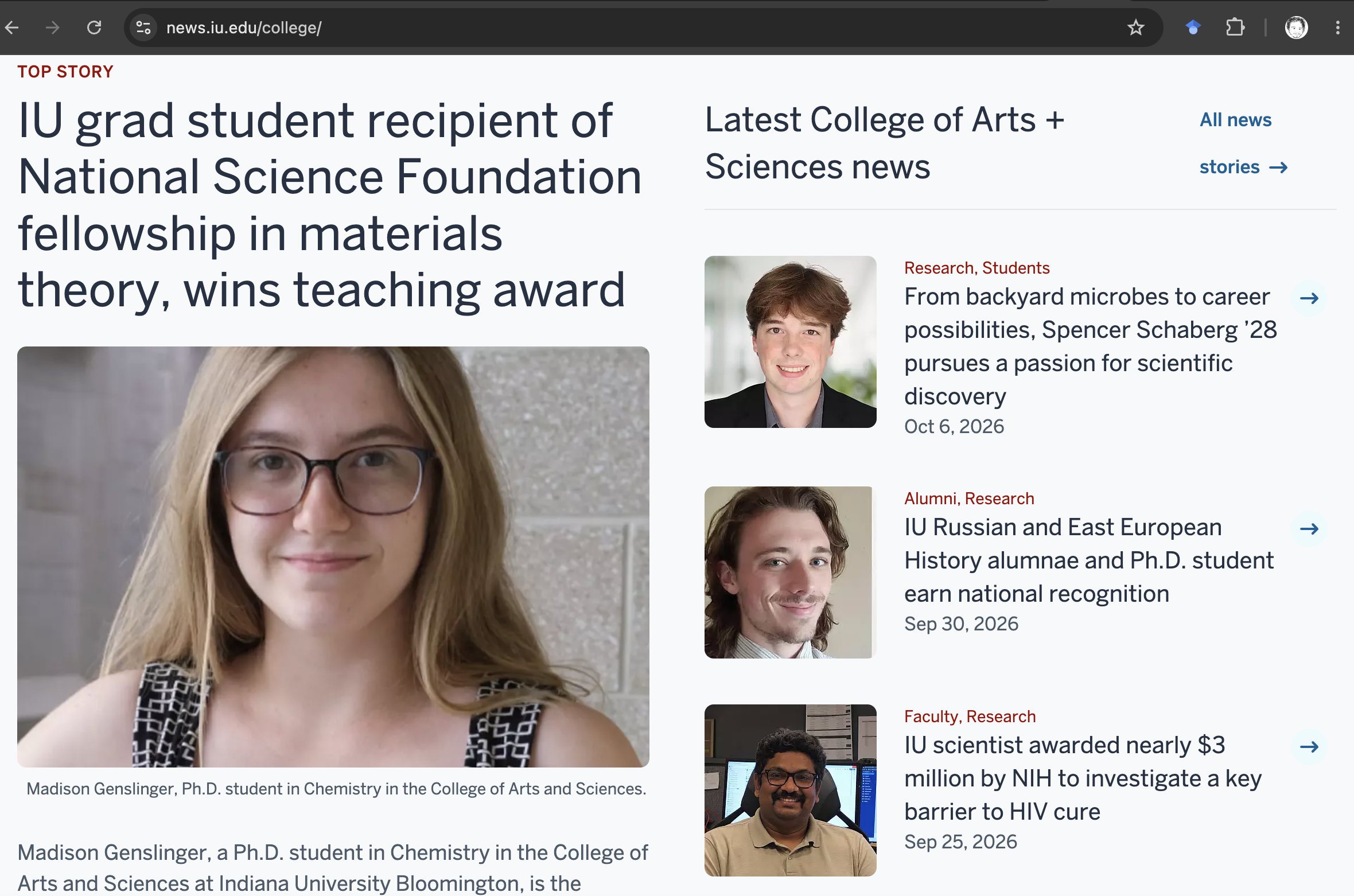
Screenshot of https://news.iu.edu/college/ taken Wed Oct 14th
Profile on Madison - Featured as College Top News
Madison Genslinger’s remarkable first year and two page profile is currently featured as the top news on the college news website.
We are incredibly proud of her. The full profile can be read here: https://news.iu.edu/college/live/news/52839-iu-grad-student-recipient-of-national-science
Text of the article below:
Madison Genslinger, a Ph.D. student in Chemistry in the College of Arts and Sciences at Indiana University Bloomington, is the recipient of a 2026 Graduate Research Fellowship Program (GRFP) award from the U..S. National Science Foundation, in Materials Research – Materials Theory, this year’s sole U.S. awardee in that category.
Sep 17, 2026
Madison Genslinger, a Ph.D. student in Chemistry in the College of Arts and Sciences at Indiana University Bloomington, approaches her research in materials science like a puzzle, one where the process matters as much as the solution.
“Each new step can provide a picture of the quantum behavior behind a material,” Genslinger said. “If you keep expanding, eventually you will know that material inside and out, but often it’s more interesting if you don’t know so you can keep trying to solve the puzzle.”
That approach has already produced two major honors for Genslinger, both arriving early in her graduate career, during her first year as a Ph.D student. This spring, Genslinger was named the sole recipient in the United States of a 2026 National Science Foundation (NSF)
Image - 1:Image - 1:View print quality image about Headshot image of Madison Genslinger, Ph.D. student in Chemistry in the College of Arts and Sciences. about Headshot image of Madison Genslinger, Ph.D. student in Chemistry in the College of Arts and Sciences.Madison Genslinger, Ph.D. student in Chemistry in the College of Arts and Sciences.
Graduate Research Fellowship Program award in Materials Research-Materials Theory, guaranteeing her three years of funding.
The NSF fellowship is considered the most prestigious graduate research recognition in the country, and Genslinger’s competition included Ph.D. students from chemistry, physics, chemical engineering and dedicated materials science and engineering departments at every major academic and research institution in America.
Materials research bridges fundamental chemistry, physics and real-world engineering, studying how to design and analyze solid substances with practical uses, from batteries to the materials inside microelectronics and solar panels. Materials theory relies on supercomputers to predict how those materials will behave before they’re built.
Genslinger is also an accomplished teacher. In her first semester at IU Bloomington, she taught Introduction to Physical Chemistry (CHEM-C-360), a course spanning thermodynamics and quantum mechanics. She won an Associate Instructor award, an honor given to just three Ph.D. students a year out of roughly 100 teaching across the department, typically awarded to students with a year or more of classroom experience.
“Teaching gives you the skills to evaluate what your student understands,” Genslinger said. “Presenting your research requires you to understand your audience, so you can scale your concepts when you present.”
Genslinger’s passion for teaching goes well beyond the classroom. She has developed novel 3D printed toys which explain basic aspects of materials’ research and her work. She will present these at both the College’s Science Fest on the IU Bloomington campus this coming October, and in collaboration with IU’s Center for Rural Engagement at events across Southern and Central Indiana.
Genslinger’s adviser, Assistant Professor of Chemistry Alexandru Georgescu, said he recognized her ability well before she set foot in Bloomington. Georgescu’s research group in the College was a recent recipient of a U.S. Department of Energy Early Career Research Program award, for their research into computational discovery and the study of quantum materials. Genslinger and Georgescu met during her visiting weekend in February 2025, while she was still working at Angstrom Technologies in Kentucky. She chose IU over offers from several top-five chemistry departments, drawn by the mentorship she saw in Georgescu’s group.
For example, in the months before her arrival that July, she read papers during lunch breaks at Angstrom and met virtually with Georgescu in the evenings to discuss them.
“Her questions often covered things I never thought about while reading the same material,” Georgescu said.
Once on campus, Genslinger moved quickly, designing her own theoretical project on quantum materials analysis within weeks of joining the Georgescu group, along with a new way to visualize how atoms bond in solids and a new methodology for AI-assisted quantum materials discovery. She presented that work at the American Physical Society’s Global Summit in March, has taken part in two quantum materials workshops this summer, and plans to audit a graduate-level math course this fall.
Genslinger is also the second consecutive graduate student from Georgescu’s group to win a teaching award while working under his mentorship, following Varsha Kumari, who is also the recipient of multiple departmental awards. Md Rajbanul Akhond, a Ph.D. student in the group, recently won an award for best first year research write-up in the department, and is the recipient of a John and Wendy Kindig Fellowship.
In addition, recent College alumna Emily Ward, now at Princeton University for her Ph.D., received an NSF GRFP in Materials Research – Chemistry of Materials for her work spanning both theory and experiment. Ward was co-advised by Sara Skrabalak, the James H. Rudy Professor and Robert & Marjorie Mann Chair of Chemistry, and Professor Georgescu.
For Georgescu, this pattern echoes a conversation he had years earlier with his own Ph.D. adviser, Yale’s Sohrab Ismail-Beigi.
“I was sharing with him the work one of my students did,” Georgescu recalled. “He stopped and asked, ‘Isn’t it nice that, as normal people, we get to be part of the journey of some really extraordinary people?’”
The grants and awards matter, but for Georgescu, they point to something more fundamental. Namely, that the creativity of students like Genslinger, paired with dedicated mentorship, produces outstanding achievements and outcomes for individuals and institutions alike.
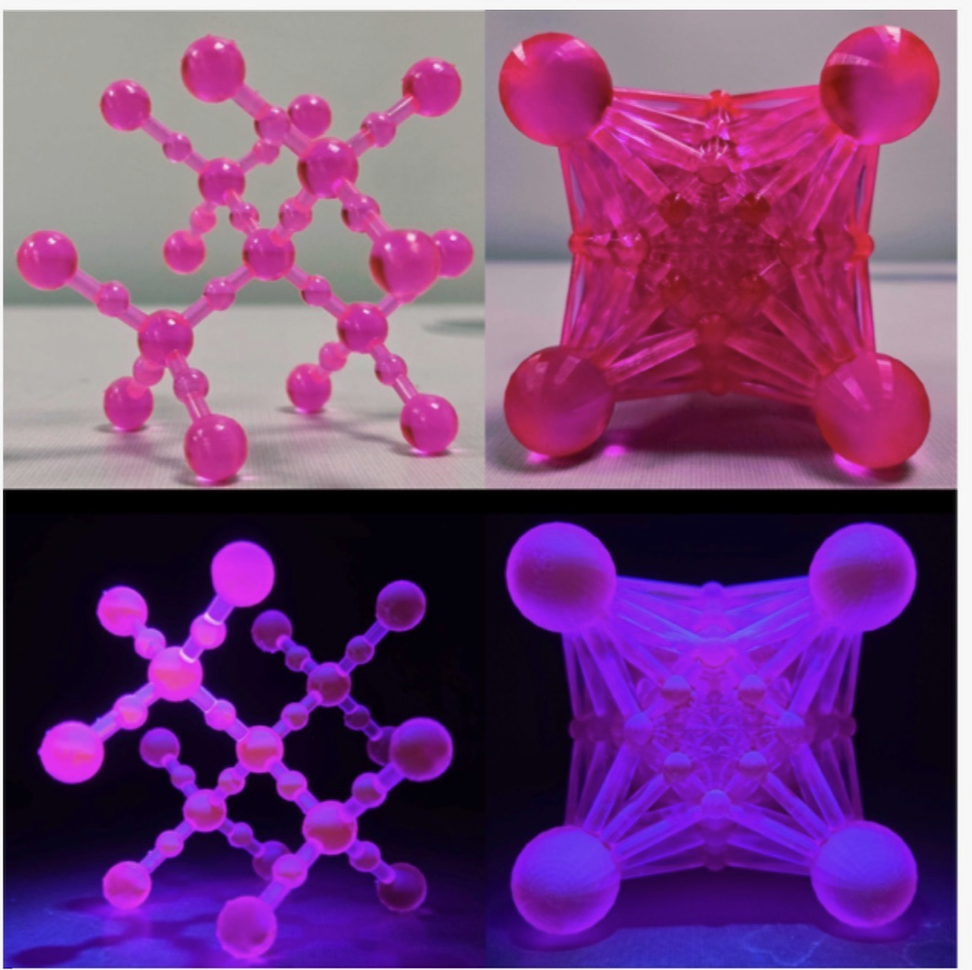
Photoluminescent 3D Printed Diamond (left) and Niobium metal (right models) under visible (top) and UV (bottom) light. In both 3D prints the large spheres represent ions, while the small spheres represent electron localization basins. For diamond, exactly 2 electrons can be found along the C-C bond, while for Nb, there are multiple basins, each with relatively low electron count, highlighting the difference between covalent and metallic bonding.
Photoluminescent Electron+Ion Crystal Structure Models
Building on her research on visualizing and understanding bonding in real space using electron localization function basin analysis, Madison Genslinger built photoluminescent 3D printed tools to explain bonding in solids. We will debut these tools first in Shelbyville, IN, in partnership with IU’s Center for Rural Engagement, followed by Science fest, on October 17th and 24th.
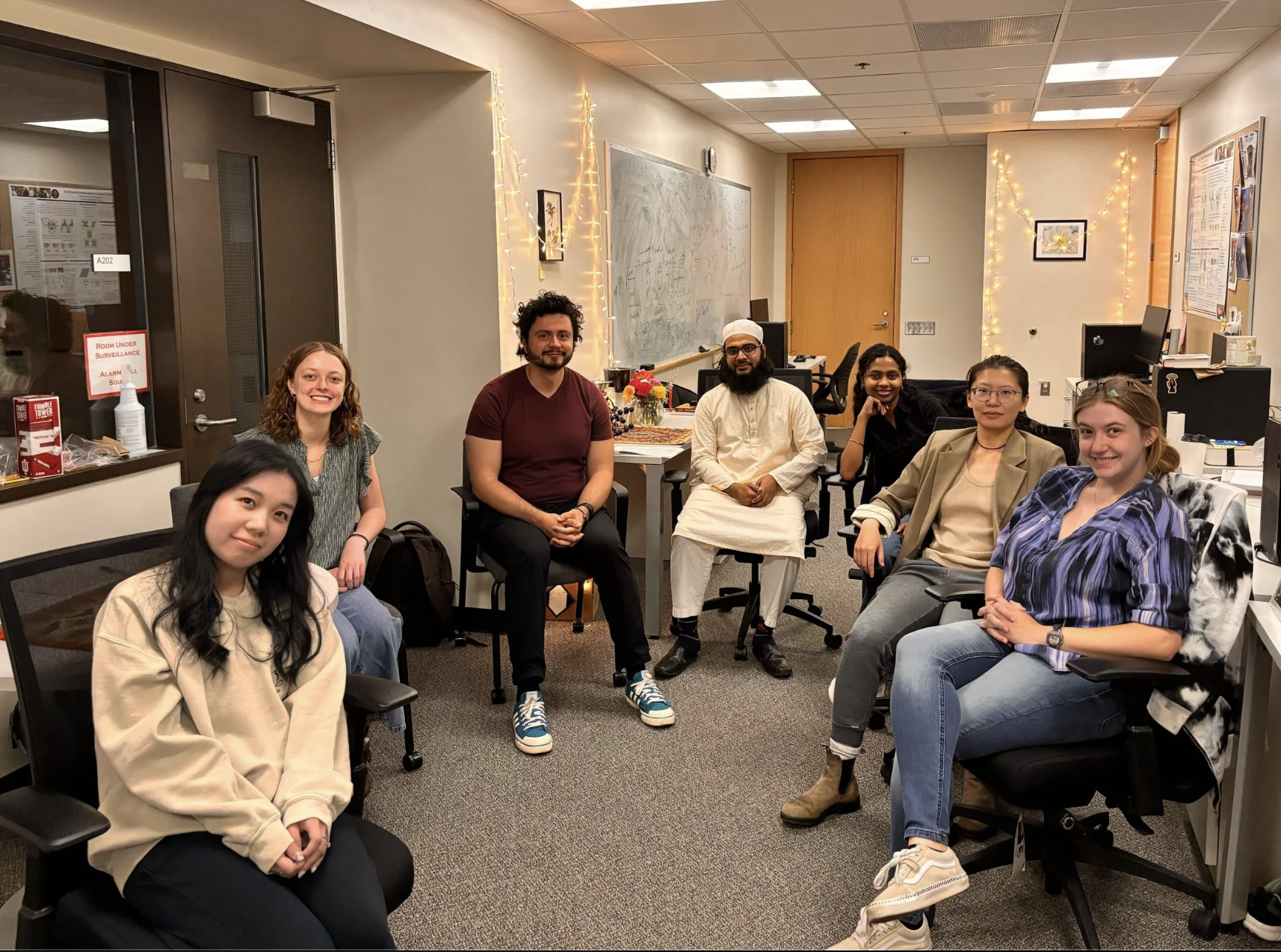
Dr Mai Nguyen, Carina Jacobson, Alex, Md. Rajbanul Akhond, Varsha, Dr Shimin Zhang, Madison Genslinger.
Student & Group Awards, Academic Year 2025-2026
Group Awards:
Dept of Energy Early Career Research Program (DOE ECRP) - 875K : https://news.iu.edu/college/live/news/49070-chemistrys-georgescu-group-awarded-dept-of-energy
international Workshop on Oxide Electronics Oxide Electronics Prize for Excellence in Research https://news.iu.edu/college/live/news/48274-chemistry-professor-wins-prestigious-oxide
NSF DMR Solid State Chem grant w Sara Skrabalak on Photoluminescent Oxyhalides (550K): https://alexbgeorgescu.com/science/2025/8/21/skrabalak-and-georgescu-groups-receive-nsf-dmr-solid-state-chemistry-grant-to-study-photoluminescent-bismuth-lone-pair-materials
And student awards:
National Awards
NSF GRFP:
Madison Genslinger (as yr 1 PhD student), sole winner in the US in the Materials Research - Materials Theory category &
Emily Ward (alumna, now at Princeton) in Materials Research - Materials Chemistry, performing both theory and experiment.
College Level Awards:
John and Wendy Kindig Fellowship: Md. Rajbanul Akhond
Department Level Awards:
C500 - best 1st yr research write-up award: Md. Rajbanul Akhond.
Associate Instructor (TA) award - Madison Genslinger. She is the second consecutive student in the group to win after Varsha Kumari in 2024-2025.
Siedle Materials Fellowship - Varsha Kumari
Additionally, our students have secured other awards and opportunities. These include Carina Jacobson’s undergraduate summer research through SURF at NIST in DC, Varsha and Madison’s computational quantum materials summer school in Canada - and Madison’s NSF travel grant supporting her, as well as a travel award for Akhond from the department.
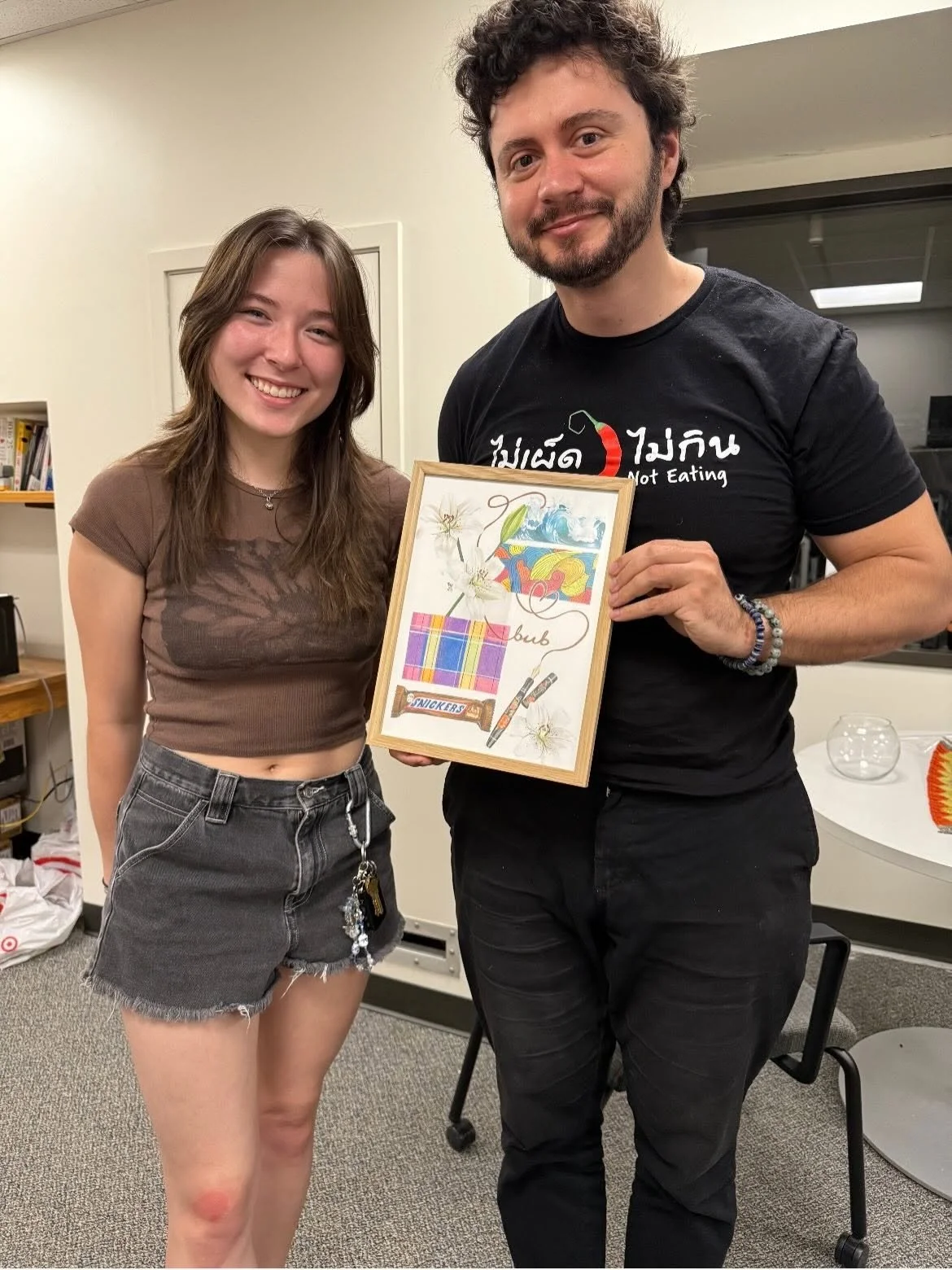
Megan, myself, and the drawing Megan made remembering my late wife, Ayinka.
Thank You and Good Luck Megan Gunter!
For once, I am writing about a student who was not a member of my research group :).
Megan Gunter was one of the top students in our department, as shown by the awards she received during her senior year. Although she pursued science as a side quest to her main quest in art, she showed herself to be just as talented in both.
Over the past year, I had the pleasure of teaching Megan, and got the pleasure of being corrected from the back of the class by her when teaching quantum, and getting asked questions I often couldn’t answer.
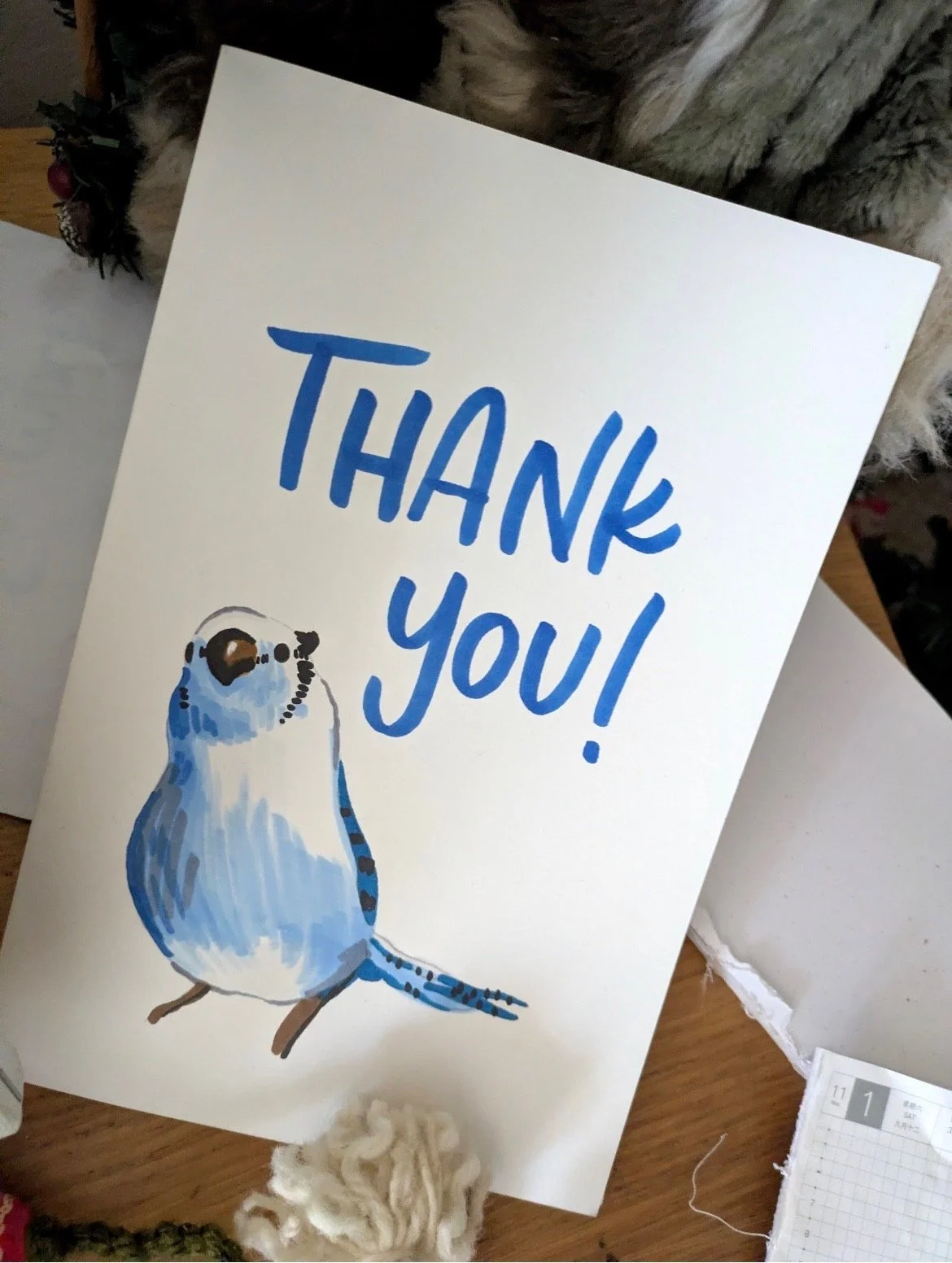
Blue bird card
A handpainted card Megan made in December, related to my ‘Birds are Quantum!‘ end of semester lecture.
She had a hard choice between chemistry Ph.D programs and art programs, and will be continuing her work in art conservation and scientific visualization in Buffalo.
Most recently, she worked very hard to make the wonderful drawing honoring my late wife, Ayinka, in the picture at the top. She watched videos, pictures, and used prompts we discussed. She did very much the same thing she did in quantum. Her portfolio is here and I can’t recommend her work enough: https://meggunte.myportfolio.com/
(keep scrolling to see the full drawing & continue reading)
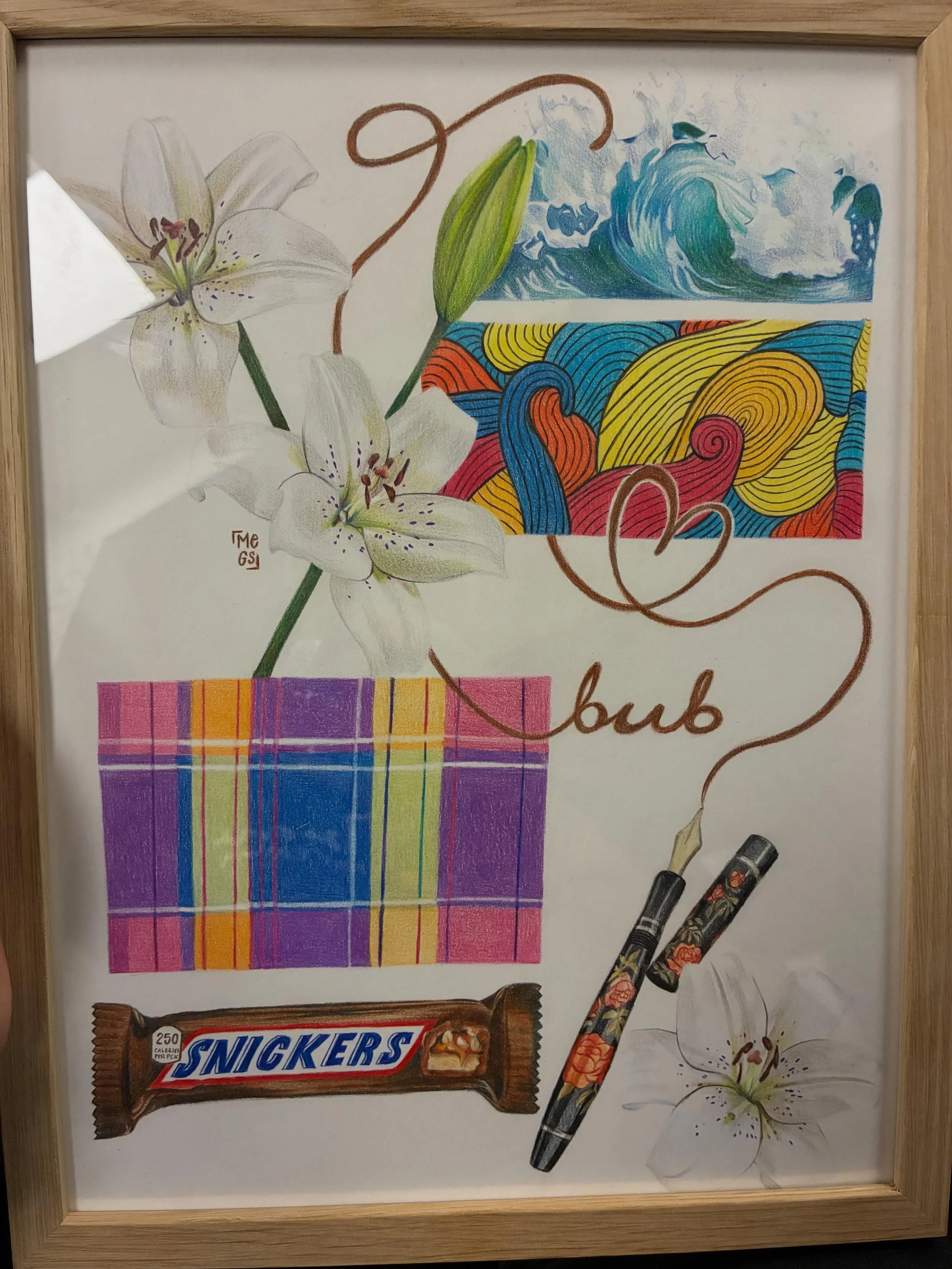
Memorial artwork Megan made for Ayinka.
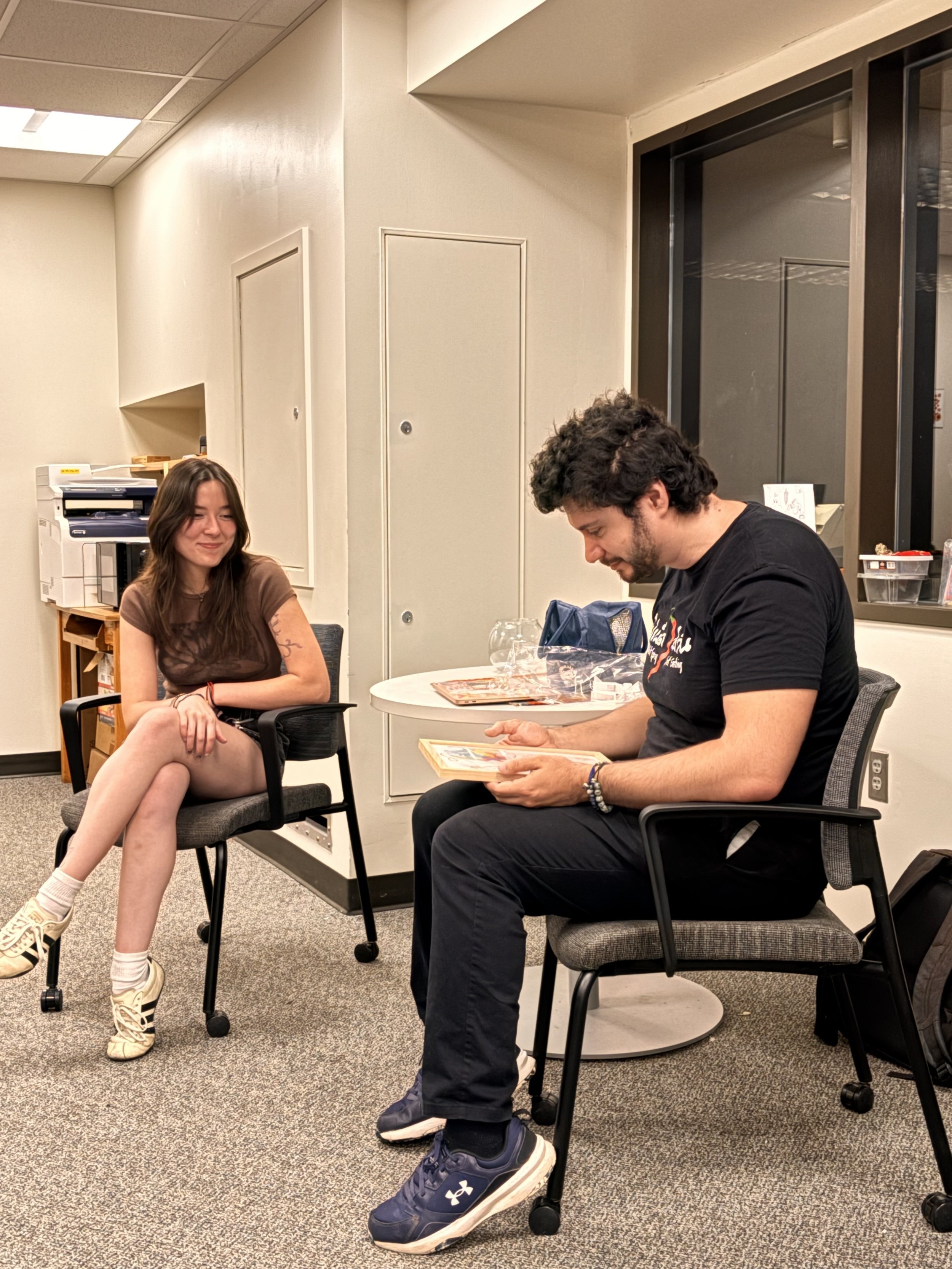
Megan brought the artwork to the office.
She made an impression on the students in our group who interacted with her - both as her teachers, her classmates, or just interacting with her in passing - and we all wish her the best of luck as she moves away from Bloomington.
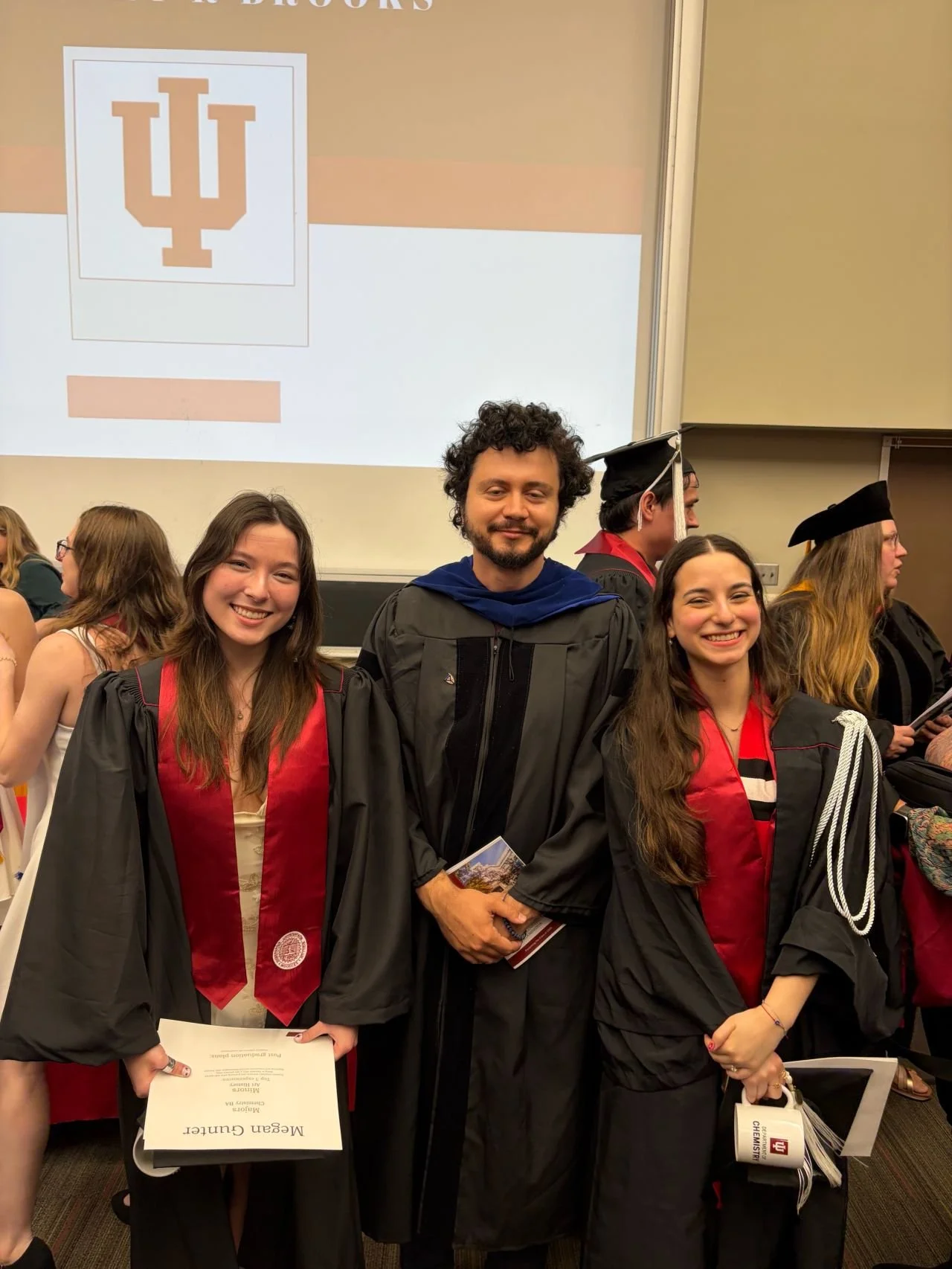
Megan Gunter, myself and Eva Hernandez; both stellar students from our department.
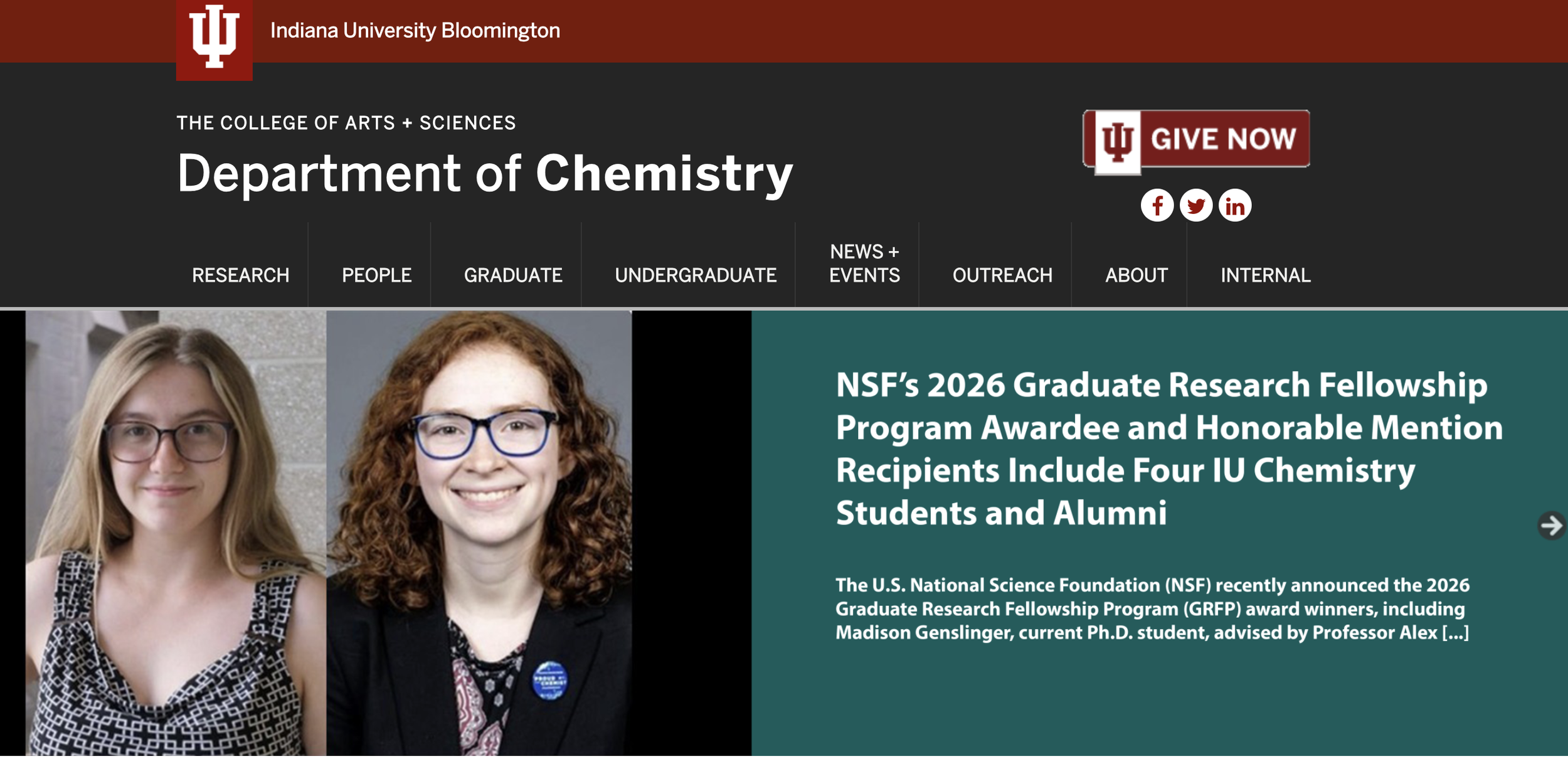
Madison and Emily Featured By The Chemistry Department
The article link is here: https://www.chem.indiana.edu/2026/04/nsfs-2026-graduate-research-fellowship-program-awardee-and-honorable-mention-recipients-include-four-iu-chemistry-students-and-alumni/
Text: The U.S. National Science Foundation (NSF) recently announced the 2026 Graduate Research Fellowship Program (GRFP) award winners, including Madison Genslinger, current Ph.D. student, advised by Professor Alex Georgescu. Receiving an award in Materials Research – Materials Theory, Ms. Genslinger is this year’s sole U.S. awardee in that category.
In addition, IU alumna, Emily Ward, now at Princeton University, received an NSF GRFP in Materials Research – Chemistry of Materials for her work spanning both theory and experiment. During her time at IU, Emily was co-advised by Prof. Sara Skrabalak (experiment) and Prof. Georgescu (theory).
Both Ms. Genslinger and Ms. Ward are recent departmental award recipients: Ms. Genslinger received an Associate Instructor Award, and Ms. Ward received the Schwarzkopf Award as the highest achieving graduating undergraduate student in 2025.
NSF GRFP Honorable Mention recipients are Ph.D. student Jessica Samol in Chemistry – Chemical Structure, Dynamics, and Mechanism, advised by Prof. Romualdo de Souza, and IU alumna Alex Butrum in Chemistry – Macromolecular (including Polymer Chemistry), Supramolecular, and Nanochemistry, advised as an undergraduate by Prof. Xingchen Ye. Ms. Butrum is now at Northwestern University and currently advised by Chad Mirkin.
Special thanks are in order for everyone in the department who submitted NSF GRFP proposals, particularly given the changes in timeline and eligibility this cycle.
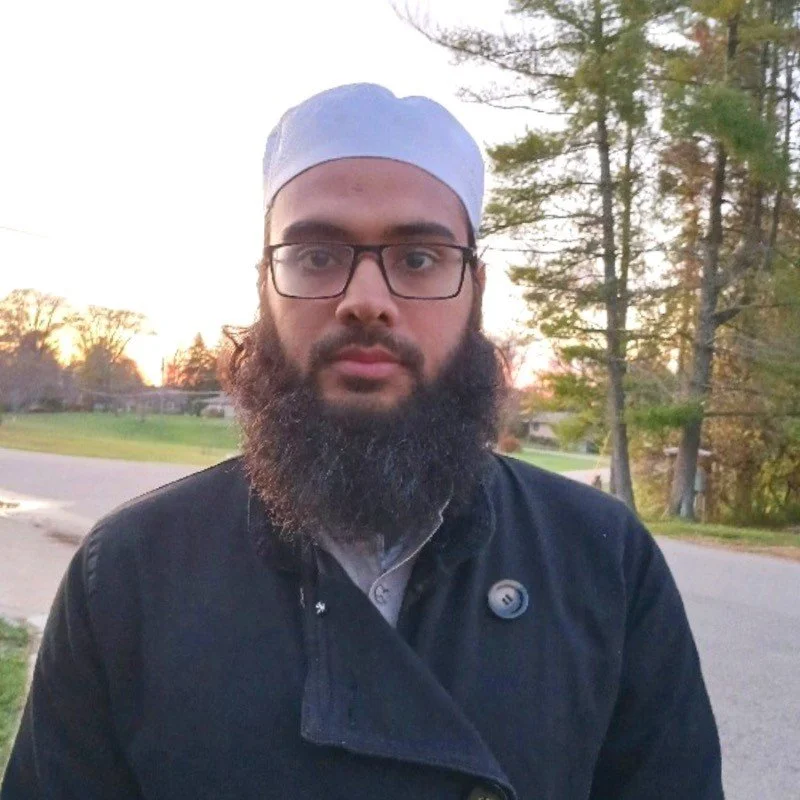
Akhond Awarded Kindig Fellowship & Best First Year Ph.D Student Write-up!
Md Rajbanul Akhond (Akhond) was awarded two important prizes! The first, by the department, is the Ernest Campagne C500 award. This is given to a single graduate student per year (his class has over 50 students!) for the best first-year write up. Much of his work is documented here: https://arxiv.org/abs/2601.04460
Separately, he won the John & Wendy Kindig Fellowship given by the College! This fellowship helps provide support for him during his 3rd year as a Ph.D student. It also acknowledges him as one of the top students in Chemistry/Biochemistry/Biology. You can find more of his work both at IU and before here: https://scholar.google.com/citations?user=DU9b1PcAAAAJ&hl=en&inst=13098912254855678857
He is the second student in our group in a row (last year, Varsha Kumari won it) to be awarded this fellowship. Due to her NSF GRFP making her ineligible, Madison will break the streak :).
Congratulations Akhond!
Madison and Emily win NSF GRFP Fellowship
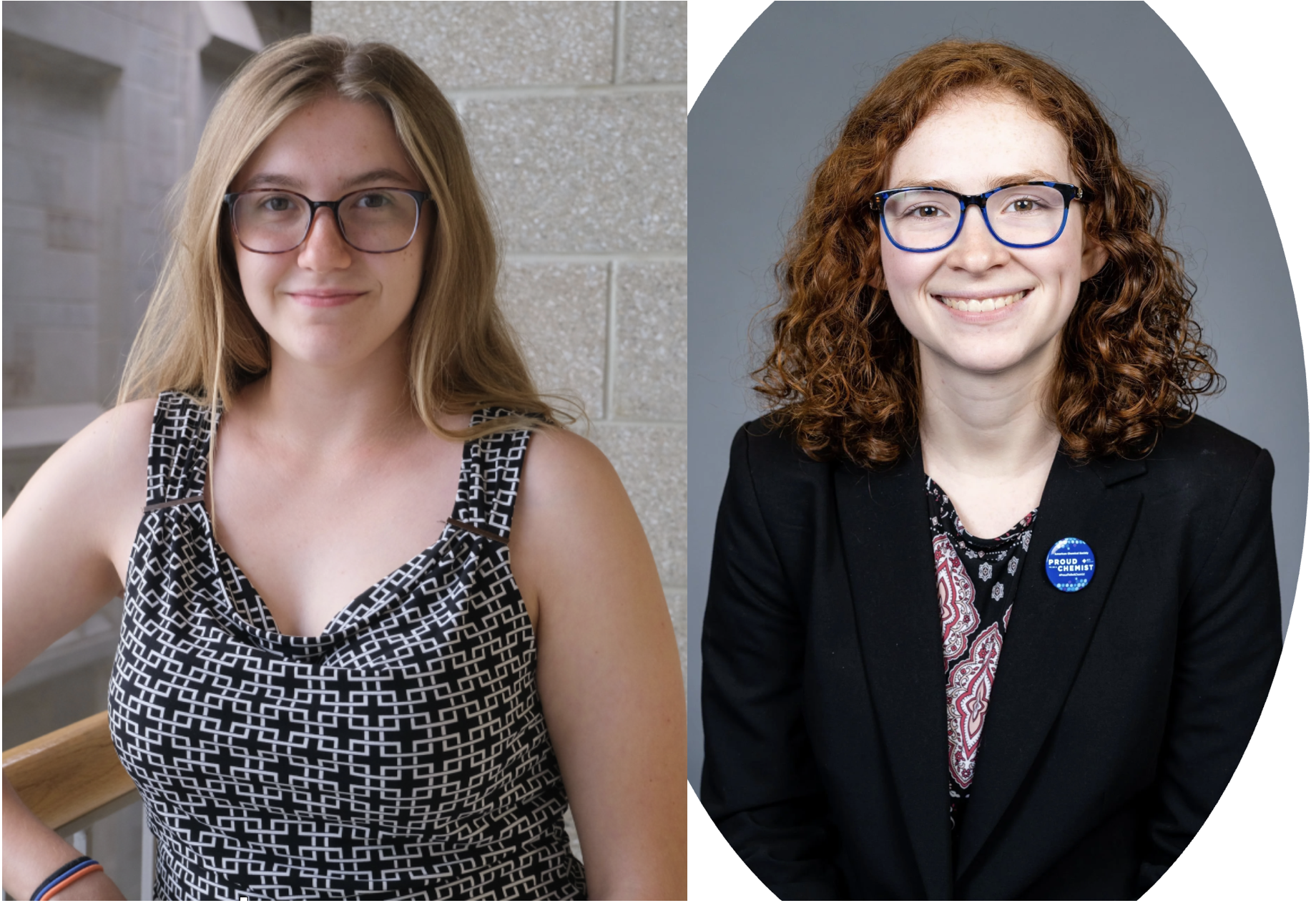
Congratulations to Madison Genslinger (left, Ph.D student year 1) and Emily Ward (our alumna, now at Princeton) for winning NSF GRFP awards! Madison is the sole winner in Materials Research - Materials Theory. Emily is performing research combining experiment and theory in Leslie Schoop’s group and won in Materials Research - Chemistry of Materials.
Very proud of them both, and proud to mentor such awesome students!
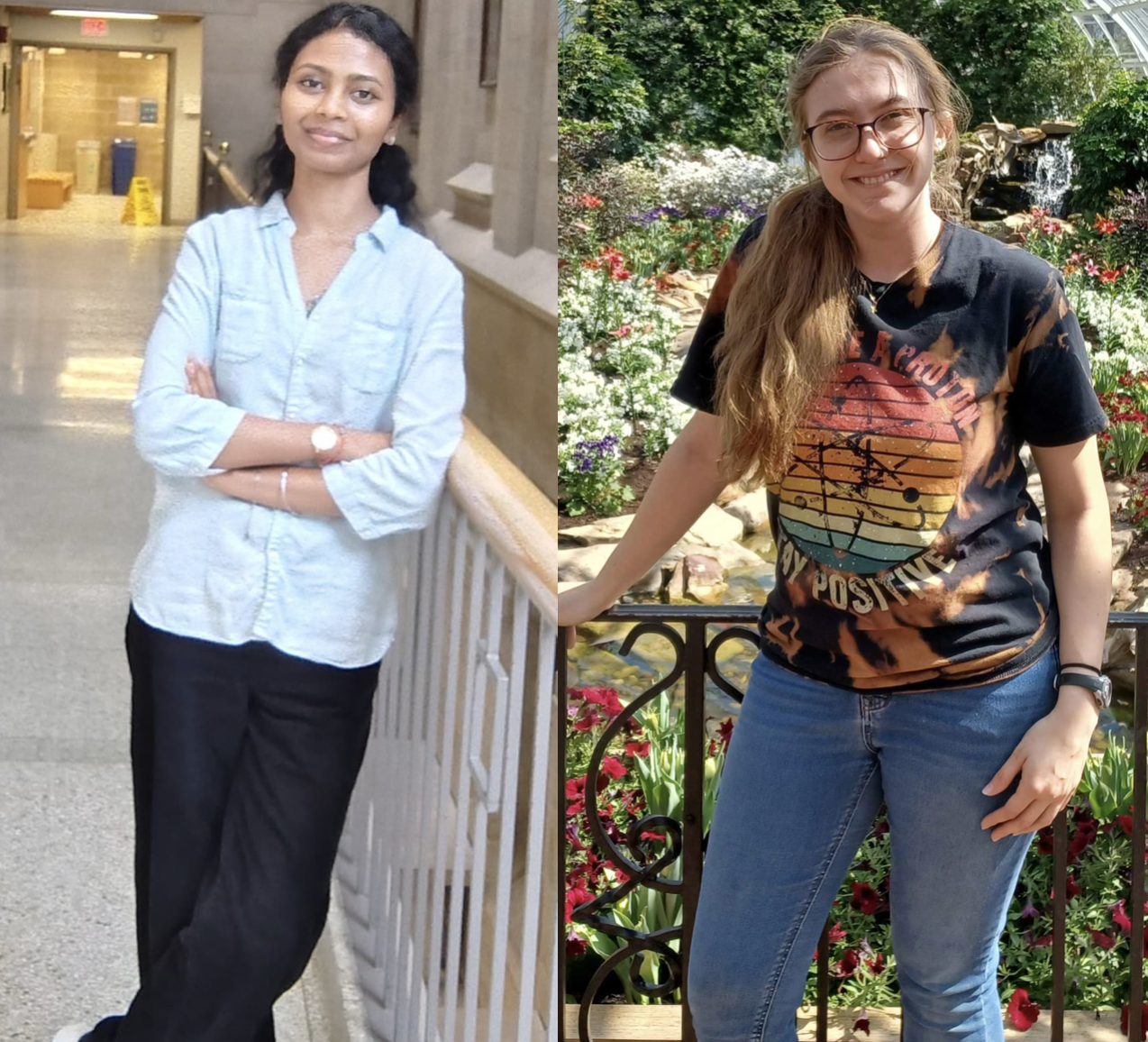
Varsha and Madison accepted at the International Summer School on Computational Quantum Materials hosted by University of Sherbrooke
Many congratulations 🎉 to Varsha Kumari (yr 3) and Madison Genslinger (yr 1) who were accepted to attend the 2 week International Summer School on Computational Quantum Materials, hosted by the University of Sherbrooke, Canada, to be held at Centre de Villégiature Jouvence (https://www.usherbrooke.ca/ecoles-de-pointe/en/physics/2026-computational-quantum-materials ). They will present their own amazing work 🎉 and learn new topics on DFT, DFT+DMFT, GW, and many other quantum many-body electronic structure tools, taught by leading experts from Canada, the US and Europe (including Antoines Georges - one of my own former PIs at CCQ, Gabriel Kotliar, André-Marie Tremblay, Michel Côté and Olivier Parcollet).
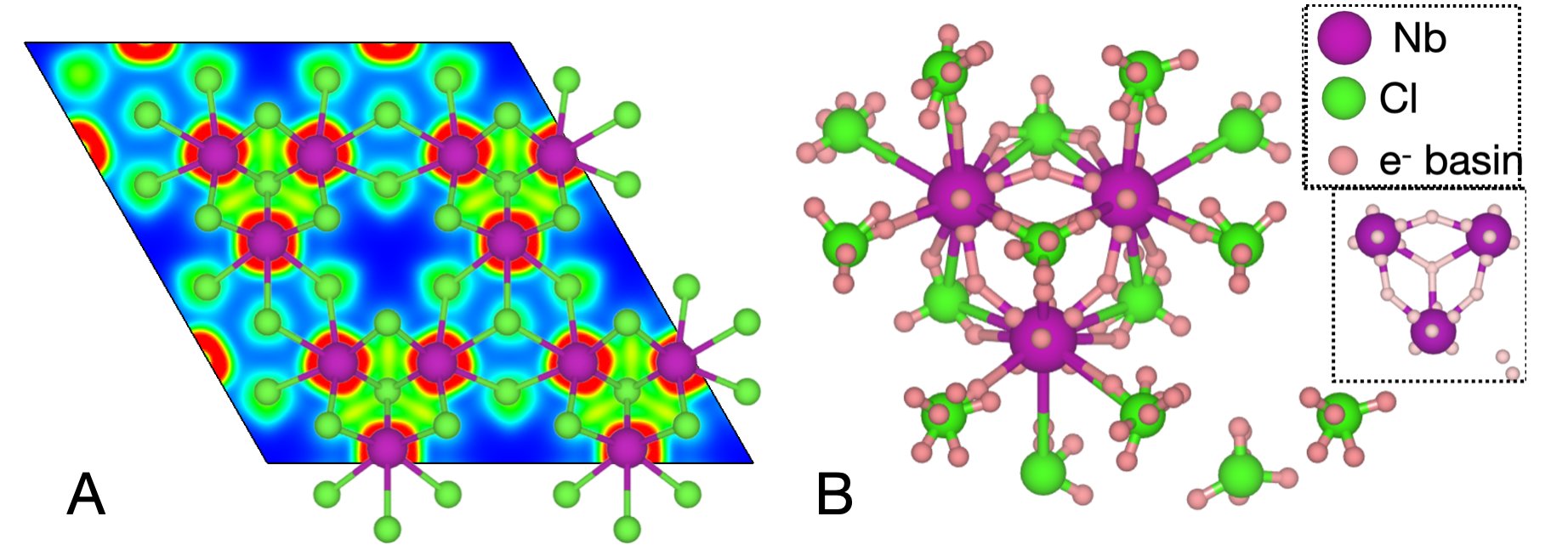
A) Electron Localization Function slice through the Nb3 plane of Nb3Cl8, and B) crystal structure+electron localization basins.
Electron Localization Basin Tools
As part of her work her first summer and fall semester, Madison Genslinger built her own tools to visualize electron localization basins around ELF localization function maxima, that export critic output into cif files for easier visualization in VESTA. The one caveat at the moment is that the electron localization basins are identified as H atoms for export into vesta, which is easy to fix. The Github also has some html+javascript files that can be opened directly in a browser, no Vesta needed.
You can also read more about Varsha Kumari’s work on these materials here: https://pubs.rsc.org/en/content/articlehtml/2025/tc/d5tc01981h
and Md. Rajbanul Akhond’s cluster materials explorer here: https://cluster-explorer.me/
Group Wins Department of Energy Early Career Research Program Award
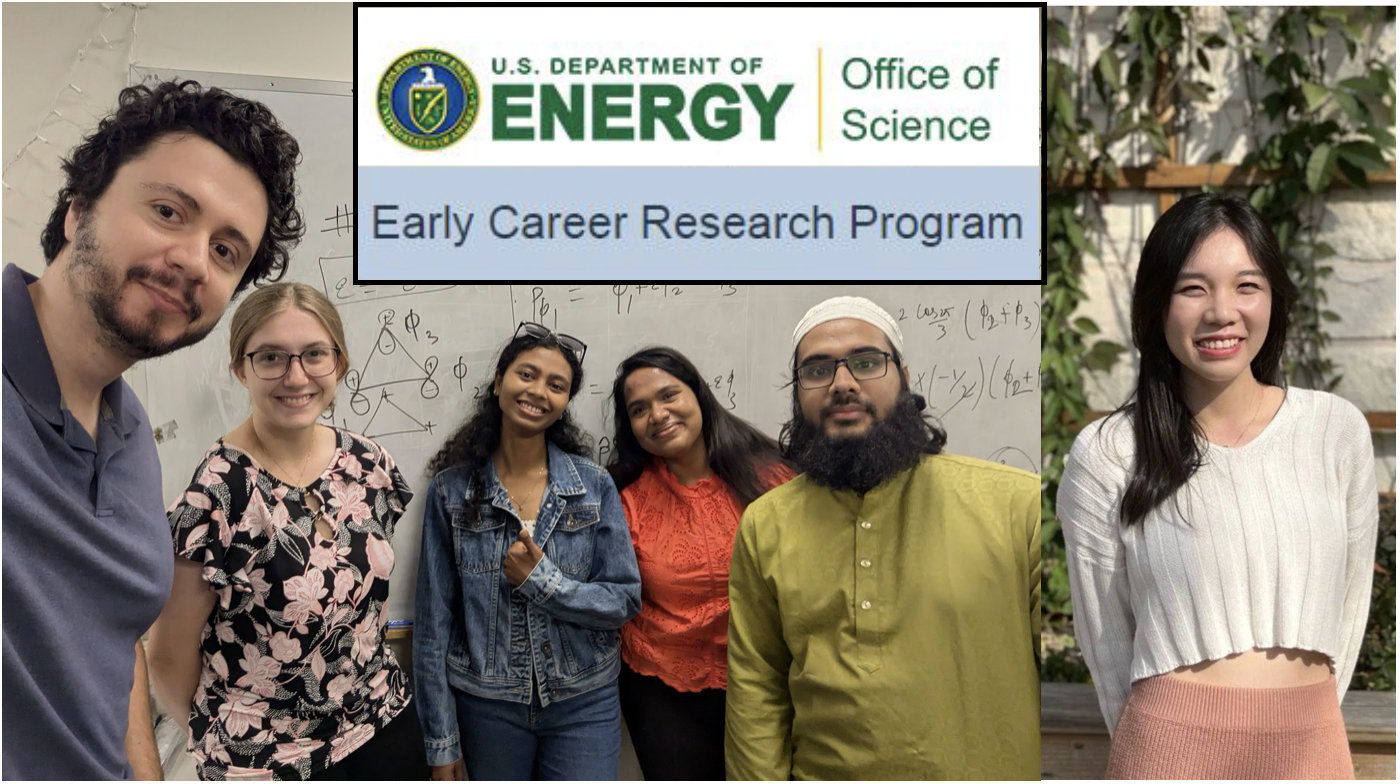
Happy to announce that our group received a Department of Energy Early Career Research Program (DoE ECRP) award (Correlated Electron Materials with Novel Quantum Building Blocks, DOE DE-SC0026069; of 875K/5years) through the Theoretical Condensed Matter Physics program 🎉, as part of Materials Science and Engineering - Basic Energy Sciences. This also marks one of two grants we've received this year, the other being an NSF grant on photoluminescent oxyhalides in collaboration with Sara Skrabalak 's group.
The proposal I submitted was beyond anything I would have thought of when I started my position as faculty, and is the result of the creative contributions of our group members. When I started two and a half years ago, I thought I'd always keep up and be able to do what my students are doing. I gave up on that idea after a year.
This work focuses on correlated quantum materials where the relevant orbital and spin states are not the conventional d- or f- orbitals, or even flatbands arising from frustration, but molecular orbitals in a cluster in a solid (e.g. Nb3Cl8).
We took the picture to the left in July, when I had just found out about the award and announced it to the group. So I would like to highlight some group member contributions.
From left to right, after me there's:
Madison Genslinger (yr 1) - started this July, and already developed new directions in how quantum materials bond, and how bonding in them can be represented. She's already pushing us beyond the original award.
Varsha Kumari (Yr 3)- who started the project in the group, and gave us insight into these materials' symmetry and what makes them exist to begin with. You can see her work here: https://pubs.rsc.org/en/content/articlehtml/2025/tc/d5tc01981h
Dr BIPASA SAMANTA - who gave important feedback for the proposal, and pushed our group in the study of correlated oxides.
Md. Rajbanul Akhond (Yr 2)- his development of graph representations to identify these materials, and resulting database, were a foundational component for the proposal; we are *years* ahead of schedule with his work. You can already explore his database here. Wait for the periodic table to load and click on Nb and Cl for example: https://cluster-explorer.me/
Dr Mai Nguyen - our newest postdoc, is studying the mechanism by which these materials can be electrochemically doped, and their correlated states be controlled.
Carina Jacobson (junior undergrad student at Purdue) - work on doping correlated electron materials with He brought us multiple collaborations.

Varsha's Excellent Qualifying Exam and Kagome Trimer Halides Paper
Varsha had her qualifying exam - the first in the group! - and had one of the best any of her committee members had seen. She is co-advised in experiment with Sara Skrabalak, so her work involves both theory on correlated electrons, as well as synthesis and theory for photoluminescent, layered & lone pair oxyhalide materials. The qualifying exam in our department is a long event: 1 hr talk+questions, followed by 1.5-2 hrs of questions from the committee members.
Her work has also been published here: https://pubs.rsc.org/en/content/articlehtml/2025/tc/d5tc01981h
Some more pictures below:

Varsha flanked by her proud (and at least in my case, nervous) advisors before her talk.
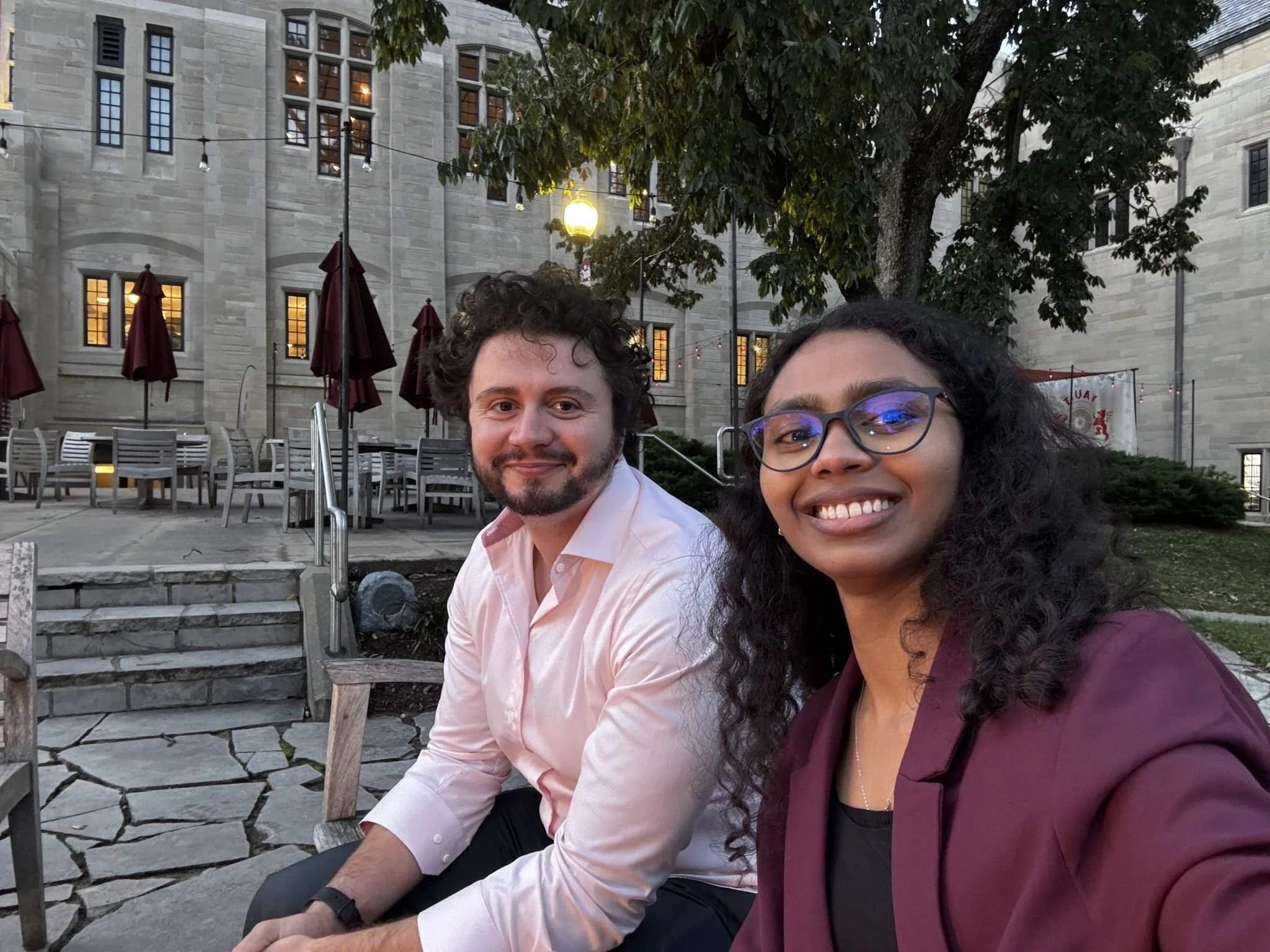
Post-exam ice cream. I do not, in fact, recommend cherry wasabi as an ice cream flavor.
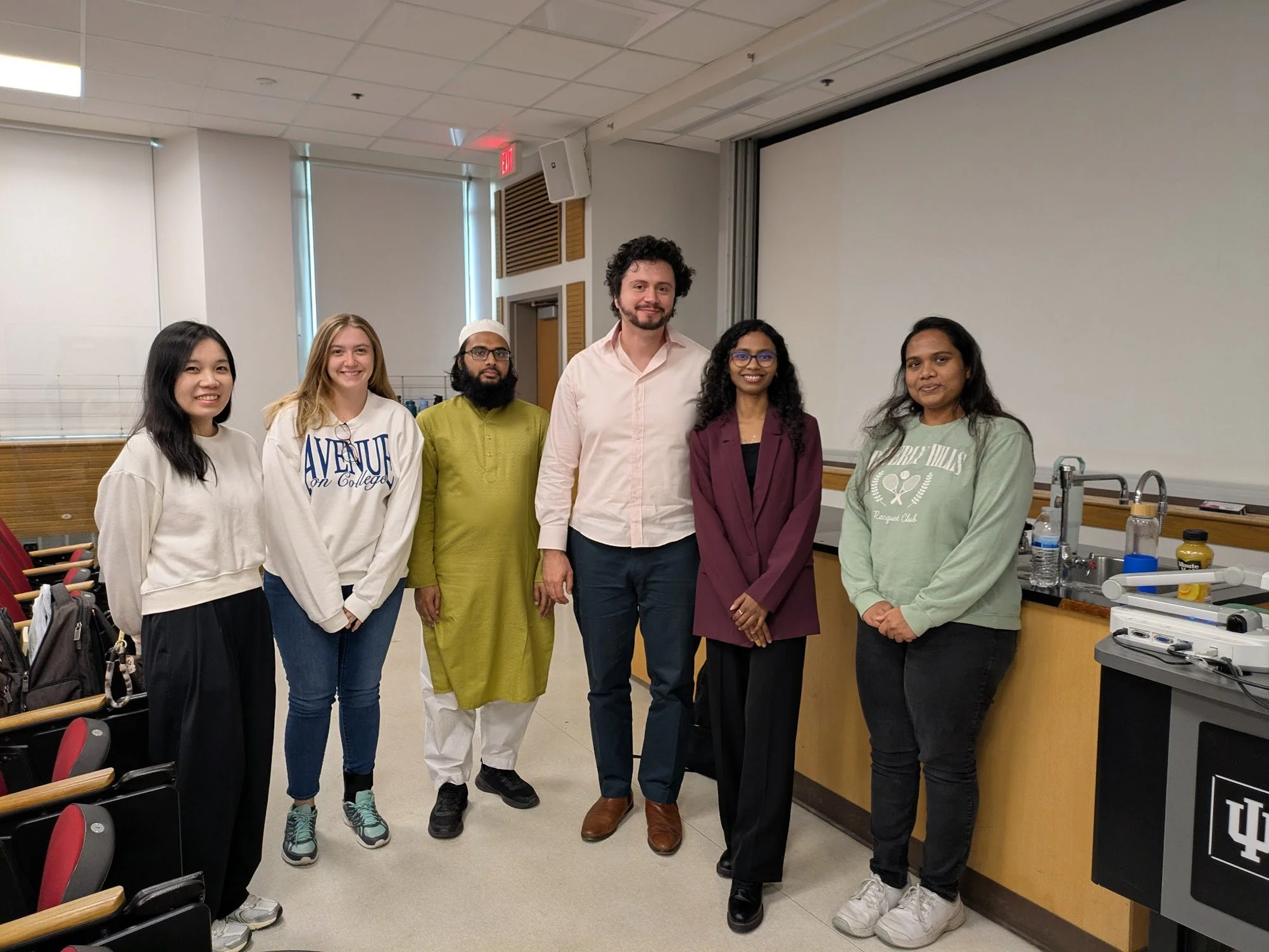
Group picture! Mai, Madison, Akhond, Alex, Varsha, Bipasa

Skrabalak and Georgescu Groups Receive NSF DMR Solid State Chemistry Grant to study Photoluminescent Bismuth Lone Pair Materials
Happy to share that Sara Skrabalak and myself have been awarded a new NSF DMR Solid State Chemistry grant for our collaborative project on photoluminescent oxyhalides with bismuth lone pairs! 🎉
This achievement would not have been possible without the incredible contributions of our students 🎉 . From left to right:
-Emily Ward (undergraduate, co-advised with Sara, now pursuing her Ph.d at Princeton) introduced these materials and the role of lone pairs to our group, then developed the first Wannier-based Hamiltonian and representation of lone pairs in a solid ( https://lnkd.in/gb7_fMBA )
-Varsha Kumari (Ph.D. student, co-advised) laid the foundation for much of the theoretical framework behind our proposal, taught me about photoluminescence in these materials, and began her own direction in both simulations and measurements.
-Nayana Christudas Beena (in Sara’s group, who is applying for postdocs, so you should reach out to her 😊 ) has driven forward the experimental exploration of these materials while making our team discussions more rigorous, as well as helped mentor Emily since she started college.
-Connor Schulte (in Sara's group) contributed important preliminary results that helped shape this direction.
I am especially grateful to Emily and Varsha for trusting me enough to work with me before I even had a research group of my own, and for setting the stage for the outstanding students who have since joined our group.
This project allows us to continue supporting and training excellent students , who are pushing science forward! 🎉
Varsha Attends IEEE Ferroschool at Oak Ridge National Labs
Congratulations (again) to Varsha for being accepted and attending the IEEE Ferroschool at Oak Ridge National Labs. She is learning about a wide range of theoretical, experimental and AI-related tools for ferroelectric & polar materials study and discovery. We can’t wait to hear what she will learn.
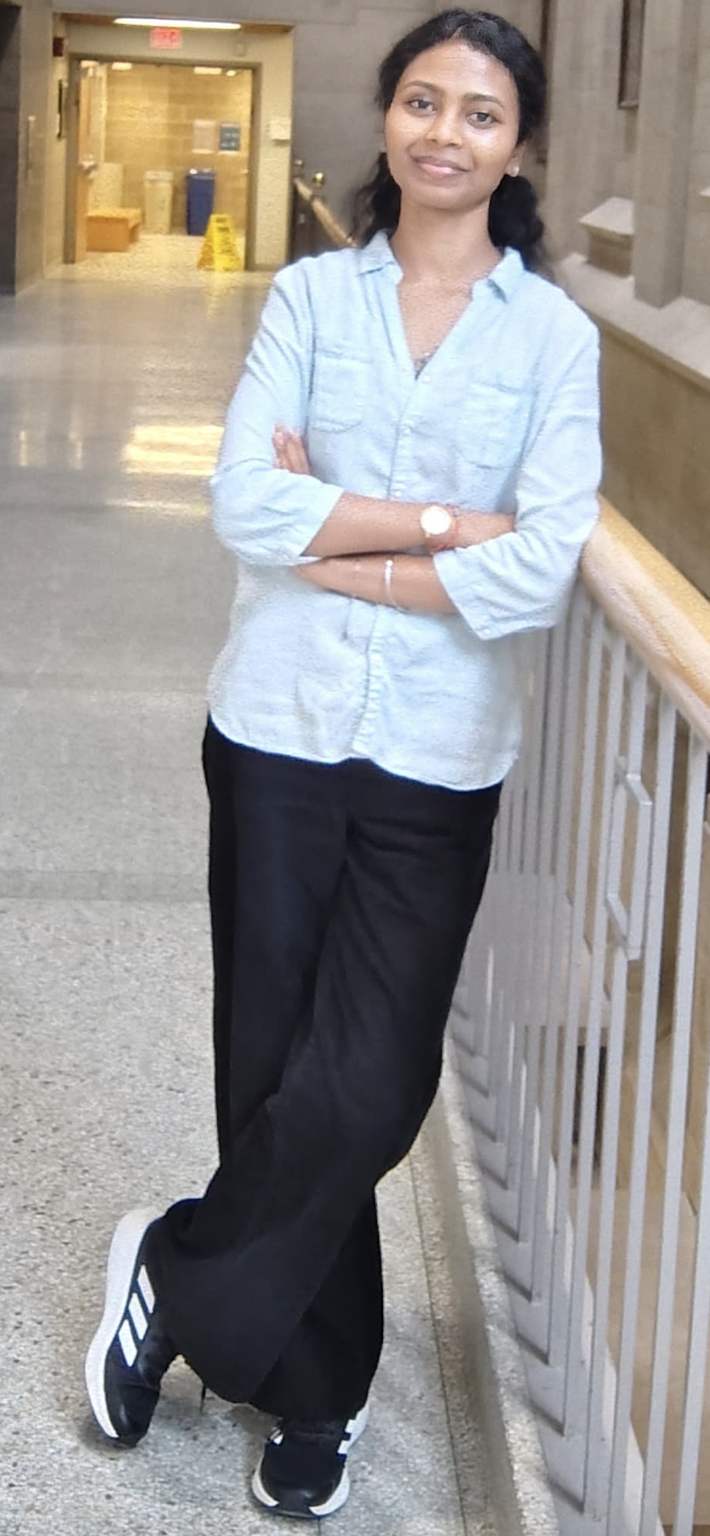
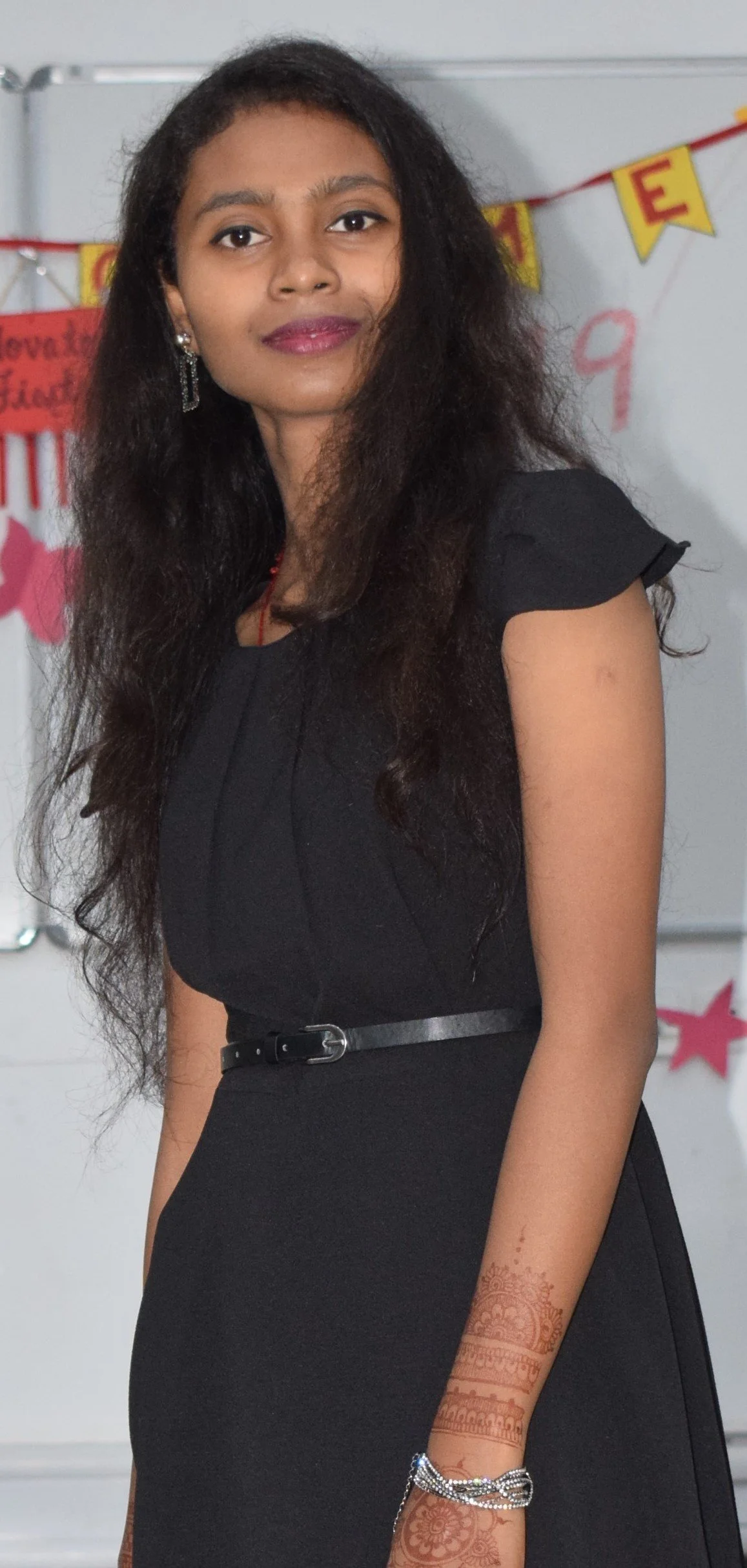
Congratulations Varsha for her awards at the Electronic Materials & Applications Conference, Teaching award, and Kindig Fellowship!
We congratulate Varsha for her multiple awards this year. These include a first prize for best student presentation at the Electronic Materials and Applications conference in February in Denver, a teaching award from the department for teaching with Alex this year, and a Kindig Fellowship that will help support her research during the third year of her Ph.D.
Congratulations Varsha for her awards at the Electronic Materials & Applications Conference, Teaching award, and Kindig Fellowship!

Congratulations Emily and Good Luck at Princeton
Congratulations Emily! Emily is the first undergraduate student to graduate from our group. She did a remarkable amount of work of high complexity during her time in the group, including the first paper accurately modeling lone pairs in a solid using Wannier functions (https://iopscience.iop.org/article/10.1088/2515-7639/adc33e/meta ). We will miss her high energy and kindness, and wish her good luck during her Ph.D at Princeton.
Group presents at PINDU, November 2024
Group Member Presentations at Conferences In November
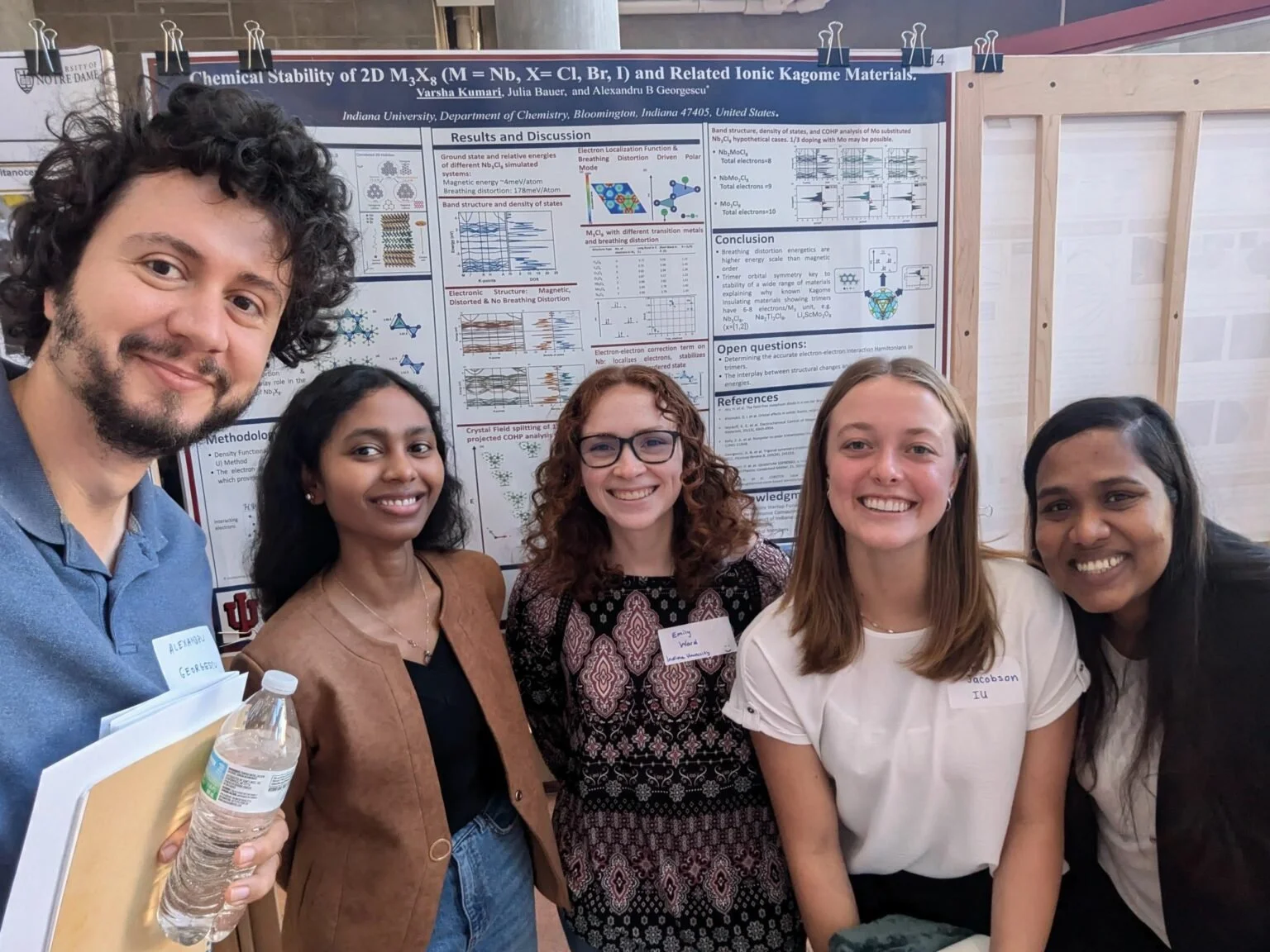
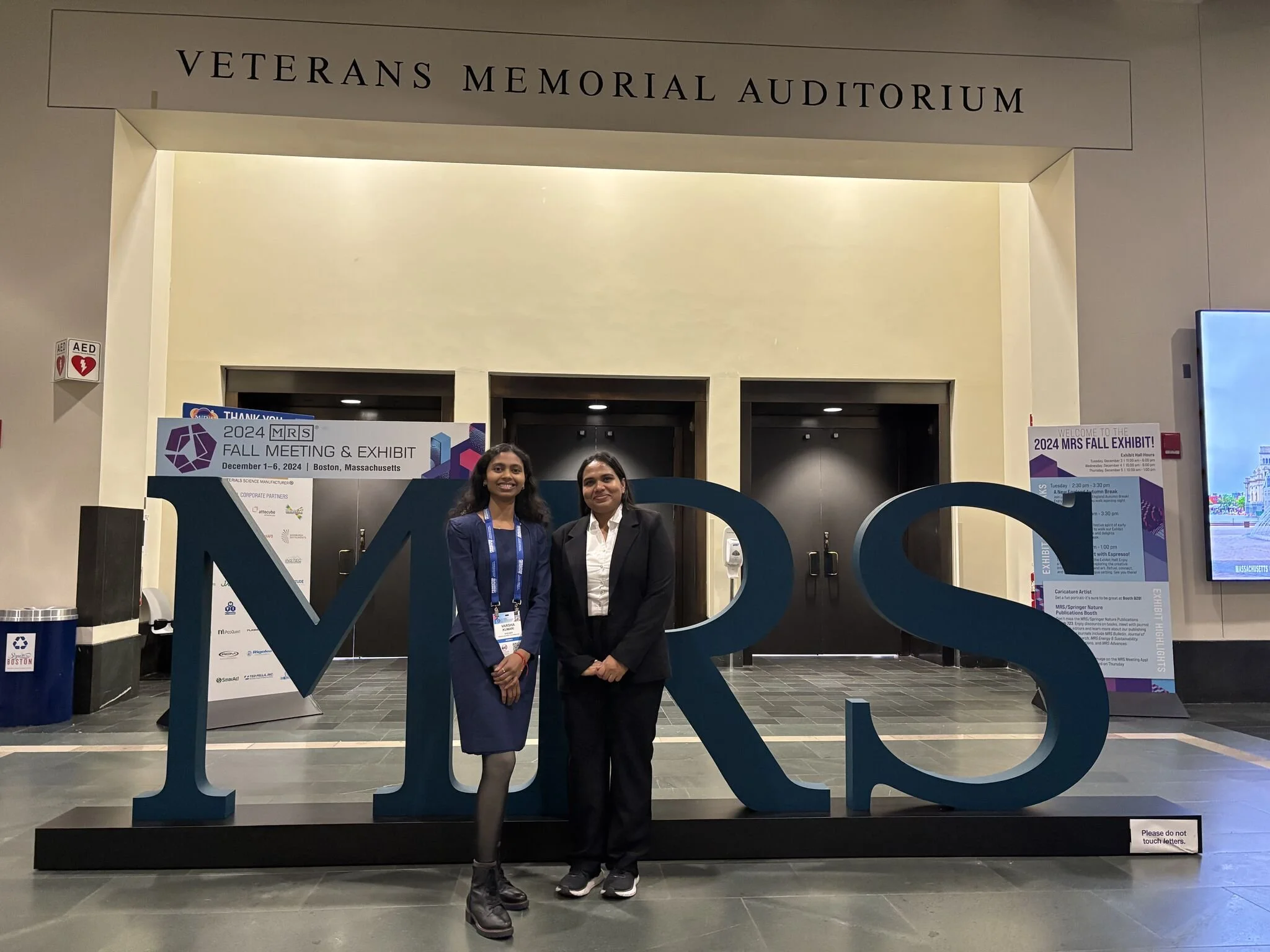
Our group members presented at multiple conferences this Fall! In November, Varsha, Emily, Carina and Bipasa all presented their posters at PINDU (see picture above), the Purdue, Indiana and Notre Dame inorganic chemistry conference. Later on, Varsha and Bipasa presented their work at the Fall Meeting of the Materials Research Society in Boston. Varsha and Bipasa each presented a poster, and Varsha also gave a talk. Varsha also won a travel award from the department supporting her travel and recognizing her high quality work on the theoretical study of trimer halide materials. Congratulations all!
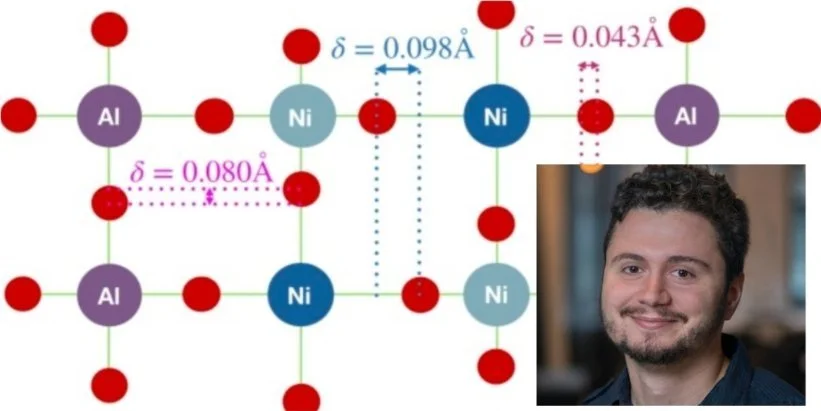
PARADIM Johns Hopkins University/Cornell University Summer School Talk
You can now watch the PARADIM Summer School talk I gave online at Johns Hopkins University. The goal with this talk was to introduce students to concepts they may need to understand the literature in the field of correlated electron materials, with a focus on superconductors, particularly cuprate and nickelate based ones; I discuss topics including what correlated electron materials are, Jahn-Teller distortions, different types of orbital models, and introduce in a non-technical way how to read a dynamical mean field theory paper and its spectral functions, and what a self-energy is.
You can watch the video here, and timestamps should guide you: https://www.youtube.com/watch?v=aVJXcH6XzJs
Here are the timestamps with the different chapters, before you click:
0:00 Intro from Tyrel McQueen 0:25 What you should get from this talk 1:40 Correlated Electron Materials in a Nutshell 2:45 Flat Bands: Kagome and Moire 3:45 Type 1 vs 2 Superconductors 4:30 Mott Physics 6:25 Electron or lattice physics? 7:00 Mott insulator 8:50 Correlated Metals 9:30 DFT vs ARPES in correlated metals: Hubbard bands and quasiparticles 10:35 DMFT, Subsidiary Bosons 11:02 DMFT Spectral function NdNiO2 and CaCuO2 11:55 Self Energy 14:45 Self-Energy and Spectral functions in SrVO3 15:03 FermiSee, simple Fermi Liquid Tool 15:57: p-d models intro 22:50 things to keep in mind when reading DMFT papers 23:30 local ionic environment and effective models 25:22 Tune Tc in cuprates via apical oxygen 27:26 Nickelate and cobaltate heterostructures for superconductivity 30:29 Machine Learning Status
Chemical Bonding Concepts in Solids
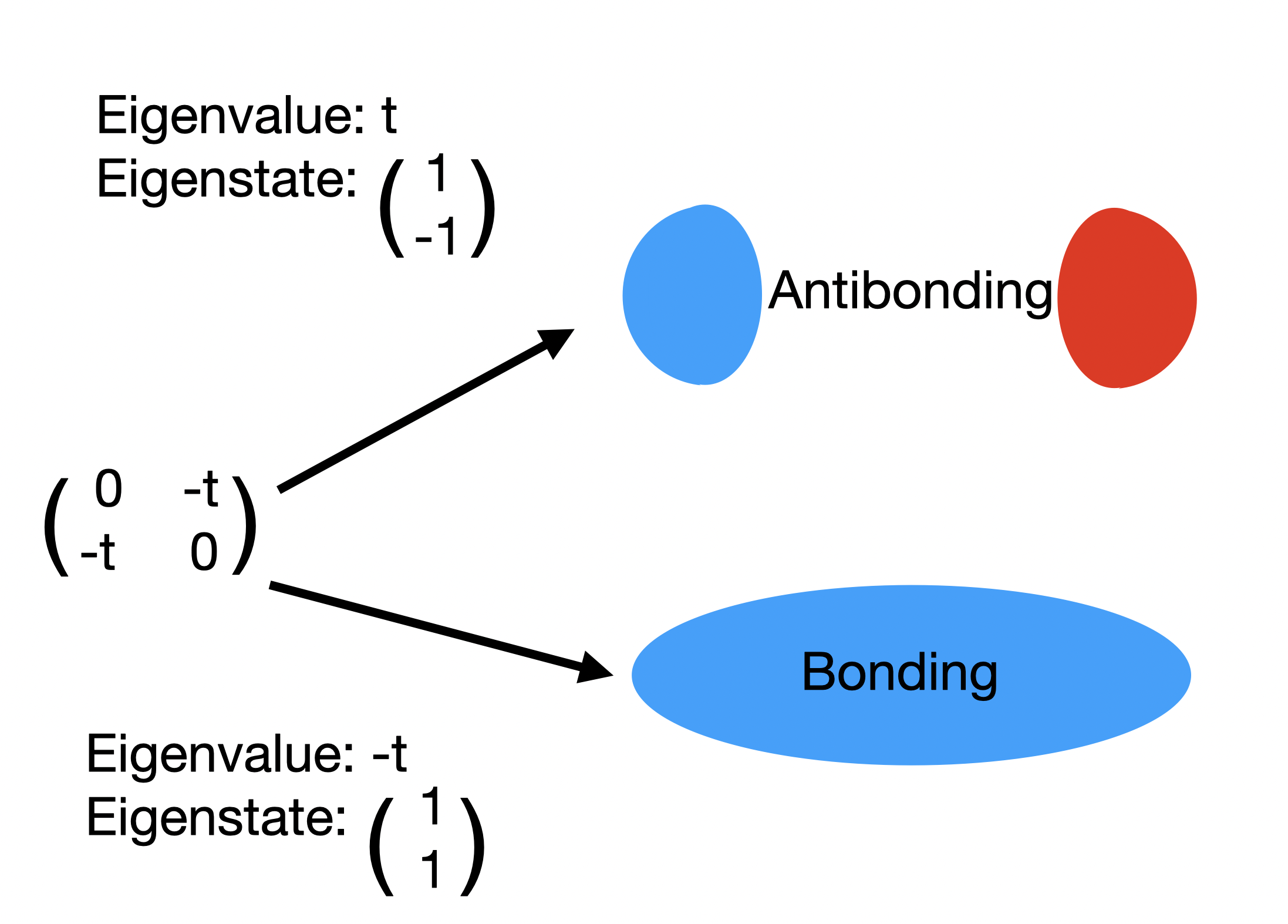
I was recently reading Nobel Chemistry laureate, Roald Hoffman’s, really nice book on bonding in solids and thought that the explanations for certain concepts (like Peierls distortion and Bloch wavefunctions) are so much clearer than the way I was taught in physics, and also make it easier for me to teach. So I decided to make this video, introducing some useful concepts from this book as well as that I use in my work on a regular basis, such as antibonding orbitals, p-d models and Wannier models. You can click on the timestamps in my comment on the video to watch the most interesting parts for you: https://www.youtube.com/watch?v=x4ihhQrS6lA
If you are a condensed matter physicist or materials scientist and never took an inorganic chemistry class, you will likely find this useful (like I did). If terms terms like Wannier functions, antibonding and p-d model are a bit confusing, you'll probably also find this useful.
I discuss chemical bonding concepts as relevant for the Peierls distortion, bonding/antibonding (antibonding orbitals destabilize materials), Bloch wavefunctions, supercells/band folding, low energy vs p-d models, Wannier functions and the LCAO (linear combination of atomic orbitals) approximation.